CONSTRUCTION
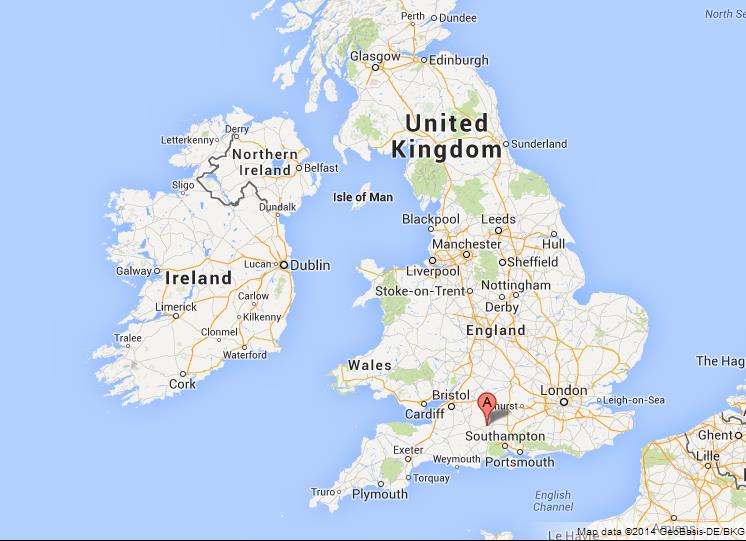 For centuries, historians and archaeologists have puzzled over the many mysteries of Stonehenge, the prehistoric monument that took Neolithic builders an estimated 1,500 years to erect. Located in southern England, it is comprised of roughly 100 massive upright stones placed in a circular layout. While many modern scholars now agree that Stonehenge was once a burial ground, they have yet to determine what other purposes it served and how a civilization without modern technology—or even the wheel—produced the mighty monument.
 Archaeologists believe England most iconic prehistoric ruin was built in several stages, with the earliest constructed 5,000 or more years ago. First, Neolithic Britons used primitive tools to dig a massive circular ditch and bank, or henge, on Salisbury Plain. Deep pits dating back to that era and located within the circlemay have once held a ring of timber posts, according to some scholars.
Several hundred years later, it is thought, Stonehenge’s builders hoisted an estimated 80 non-indigenous bluestones, 43 of which remain today, into standing positions and placed them in either a horseshoe or circular formation. During the third phase of construction, which took place around 2000 B.C., sarsen sandstone slabs were arranged into an outer crescent or ring; some were assembled into the iconic three-pieced structures called trilithons that stand tall in the center of Stonehenge. Some 50 sarsen stones are now visible on the site, which may once have contained many more. Radiocarbon dating suggests that work continued at Stonehenge until roughly 1600 B.C., with the bluestones in particularly being repositioned multiple times.
wHO BUILT STONEHENGE?
According to the 12th-century writer Geoffrey of Monmouth, whose tale of King Arthur and mythical account of English history were considered factual well into the Middle Ages, Stonehenge is the handiwork of the wizard Merlin. While many believed Monmouth’s account to be the true story of Stonehenge’s creation for centuries, the monument’s construction predates Merlin—or, at least, the real-life figures who are said to have inspired him—by several thousand years. Other early hypotheses attributed its building to the Saxons, Danes, Romans, Greeks or Egyptians. In the 17th century, archaeologist John Aubrey made the claim that Stonehenge was the work of the Celtic high priests known as the Druids. Even today, people who identify as modern Druids continue to gather at Stonehenge for the summer solstice. However, in the mid-20th century, radiocarbon dating demonstrated that Stonehenge stood more than 1,000 years before the Celts inhabited the region, eliminating the ancient Druids from the running.
Many modern historians and archaeologists now agree that several distinct tribes of people contributed to Stonehenge, each undertaking a different phase of its construction. Bones, tools and other artifacts seem to support this hypothesis. The first stage was achieved by Neolithic agrarians who were likely indigenous to the British Isles. Later, it is believed, groups with advanced tools and a more communal way of life left their stamp on the site. Some have suggested that they were immigrants from the European continent, but many scientists think they were native Britons descended from the original builders.
wHO BUILT STONEHENGE?
According to the 12th-century writer Geoffrey of Monmouth, whose tale of King Arthur and mythical account of English history were considered factual well into the Middle Ages, Stonehenge is the handiwork of the wizard Merlin. While many believed Monmouth’s account to be the true story of Stonehenge’s creation for centuries, the monument’s construction predates Merlin—or, at least, the real-life figures who are said to have inspired him—by several thousand years. Other early hypotheses attributed its building to the Saxons, Danes, Romans, Greeks or Egyptians. In the 17th century, archaeologist John Aubrey made the claim that Stonehenge was the work of the Celtic high priests known as the Druids. Even today, people who identify as modern Druids continue to gather at Stonehenge for the summer solstice. However, in the mid-20th century, radiocarbon dating demonstrated that Stonehenge stood more than 1,000 years before the Celts inhabited the region, eliminating the ancient Druids from the running.
Many modern historians and archaeologists now agree that several distinct tribes of people contributed to Stonehenge, each undertaking a different phase of its construction. Bones, tools and other artifacts seem to support this hypothesis. The first stage was achieved by Neolithic agrarians who were likely indigenous to the British Isles. Later, it is believed, groups with advanced tools and a more communal way of life left their stamp on the site. Some have suggested that they were immigrants from the European continent, but many scientists think they were native Britons descended from the original builders.
STONEHENGE’S FUNCTION AND SIGNIFICANCE
If the facts surrounding the architects and construction of Stonehenge remain shadowy at best, the purpose of the arresting monument is even more of a mystery. While historians agree that it was a place of great importance for over 1,000 years, we may never know what drew early Britons to Salisbury Plain and inspired them to continue developing it. There is strong archaeological evidence that Stonehenge was used as a burial site, at least for part of its long history, but most scholars believe it served other functions as well—either as a ceremonial site, a religious pilgrimage destination, a final resting place for royalty or a memorial erected to honor and perhaps spiritually connect with distant ancestors.
In the 1960s, the astronomer Gerald Hawkins suggested that the cluster of megalithic stones operated as an astronomical calendar, with different points corresponding to astrological phenomena such as solstices, equinoxes and eclipses. While his theory has received quite a bit of attention over the years, critics maintain that Stonehenge’s builders probably lacked the knowledge necessary to predict such events or that England’s dense cloud cover would have obscured their view of the skies. More recently, signs of illness and injury in the human remains unearthed at Stonehenge led a group of British archaeologists to speculate that it was considered a place of healing, perhaps because bluestones were thought to have curative powers.
STONEHENGE TODAY
One of the most famous and recognizable sites in the world, Stonehenge draws more than 800,000 tourists a year, many of whom also visit the region’s numerous other Neolithic and Bronze Age marvels. In 1986 Stonehenge was added to UNESCO’s register of World Heritage sites in a co-listing with Avebury, a Neolithic henge located 17 miles away that is older and larger than its more famous neighbor. Stonehenge has undergone several restorations over the years, and some of its boulders have been set in concrete to prevent collapse. Meanwhile, archaeological excavations and development of the surrounding area to facilitate tourism have turned up other significant sites nearby, including other henges.
If the facts surrounding the architects and construction of Stonehenge remain shadowy at best, the purpose of the arresting monument is even more of a mystery. While historians agree that it was a place of great importance for over 1,000 years, we may never know what drew early Britons to Salisbury Plain and inspired them to continue developing it. There is strong archaeological evidence that Stonehenge was used as a burial site, at least for part of its long history, but most scholars believe it served other functions as well—either as a ceremonial site, a religious pilgrimage destination, a final resting place for royalty or a memorial erected to honor and perhaps spiritually connect with distant ancestors.
In the 1960s, the astronomer Gerald Hawkins suggested that the cluster of megalithic stones operated as an astronomical calendar, with different points corresponding to astrological phenomena such as solstices, equinoxes and eclipses. While his theory has received quite a bit of attention over the years, critics maintain that Stonehenge’s builders probably lacked the knowledge necessary to predict such events or that England’s dense cloud cover would have obscured their view of the skies. More recently, signs of illness and injury in the human remains unearthed at Stonehenge led a group of British archaeologists to speculate that it was considered a place of healing, perhaps because bluestones were thought to have curative powers.
STONEHENGE TODAY
One of the most famous and recognizable sites in the world, Stonehenge draws more than 800,000 tourists a year, many of whom also visit the region’s numerous other Neolithic and Bronze Age marvels. In 1986 Stonehenge was added to UNESCO’s register of World Heritage sites in a co-listing with Avebury, a Neolithic henge located 17 miles away that is older and larger than its more famous neighbor. Stonehenge has undergone several restorations over the years, and some of its boulders have been set in concrete to prevent collapse. Meanwhile, archaeological excavations and development of the surrounding area to facilitate tourism have turned up other significant sites nearby, including other henges.


No comments:
Post a Comment